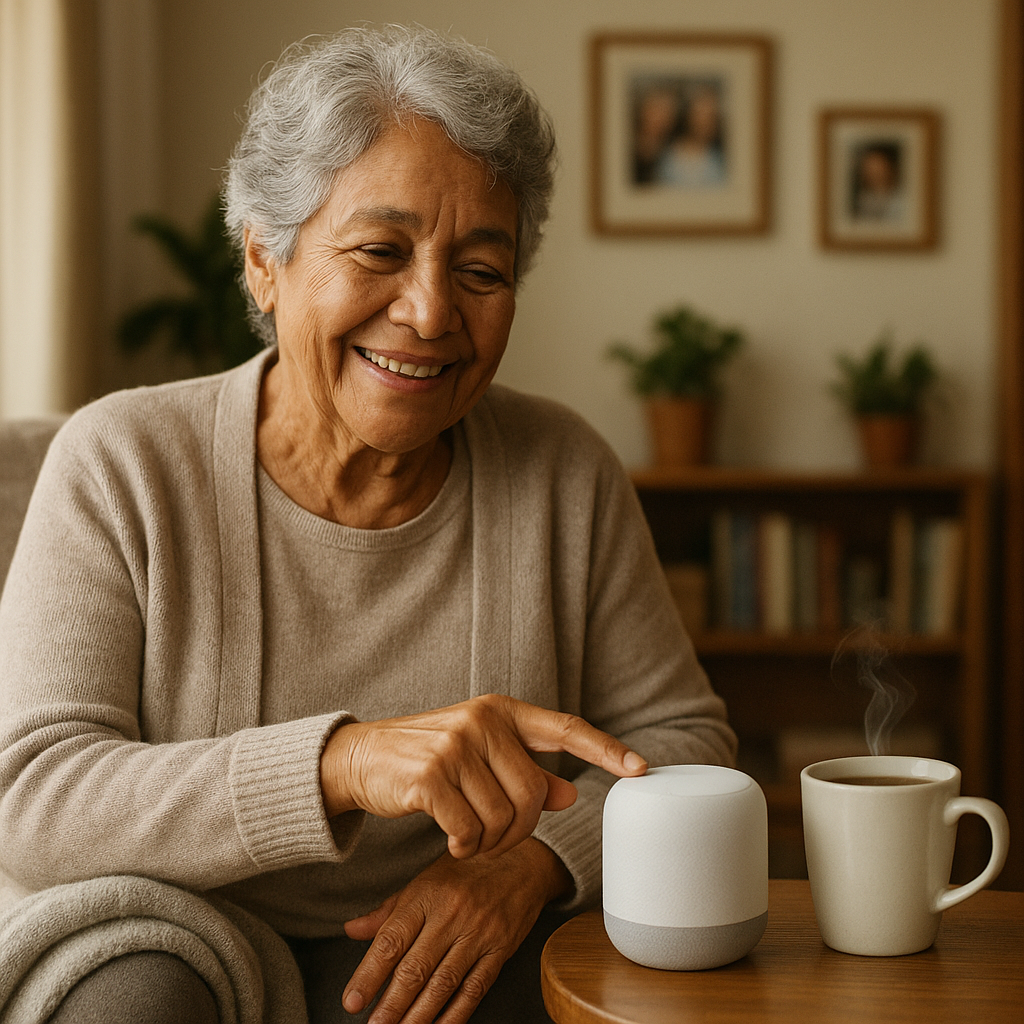
The way we think about elderly care is changing. As the global population ages at an unprecedented rate — with the World Health Organisation estimating that the number of people aged 60 and over will double to 2.1 billion by 2050 — families, caregivers, and healthcare professionals are increasingly turning to technology for support. Among the most promising developments in this space is the rise of virtual assistants: AI-powered tools designed to help older adults live more independently, safely, and comfortably.
Virtual assistants in elderly care go far beyond simple voice-activated speakers that play music or set timers. They represent a genuinely transformative shift in how older people can access information, manage daily routines, stay connected with loved ones, and even receive health-related support. Understanding how these tools work — and where their limitations lie — is essential for anyone navigating care options for an elderly relative or thinking about the future of ageing.
What Exactly Is a Virtual Assistant in the Context of Elderly Care?
The term “virtual assistant” covers a broad range of technologies. In everyday consumer use, it typically refers to voice-activated AI systems such as Amazon Alexa, Google Assistant, or Apple’s Siri. In healthcare and care settings, the term can also apply to more specialised AI-driven platforms that are specifically designed to support older adults — offering features like medication reminders, fall detection integration, health monitoring, and companionship functions.
What distinguishes a virtual assistant from a simple app or alarm system is its ability to engage in two-way communication, adapt to individual users over time, and draw on connected data to provide personalised responses. Some platforms are now sophisticated enough to detect changes in a user’s speech patterns or daily behaviour that might signal a health concern — flagging this information to family members or care professionals automatically.
Types of Virtual Assistants Used in Elderly Care
- General-purpose smart speakers: Devices like Amazon Echo (Alexa) and Google Nest are widely used in homes for reminders, weather updates, and hands-free communication.
- Companion robots and AI companions: Platforms such as ElliQ, designed specifically for older adults, offer conversational interaction, wellness check-ins, and activity suggestions.
- Telehealth virtual assistants: Used by healthcare providers to conduct remote patient assessments, medication adherence monitoring, and post-discharge follow-up.
- Integrated smart home systems: These connect virtual assistant technology with environmental controls, door sensors, and wearable devices to create a comprehensive safety net.
How Virtual Assistants Support Independent Living for Older Adults
One of the most significant advantages of virtual assistants in elderly care is their ability to extend independent living. Many older adults strongly prefer to remain in their own homes — a concept commonly referred to as “ageing in place” — rather than move to residential care facilities. Virtual assistants can make this a safer, more viable option for longer.
Routine management is one area where the impact is particularly clear. Older adults with mild cognitive impairment or early-stage dementia often struggle with daily tasks such as remembering to take medication, attending appointments, or keeping track of what day it is. A virtual assistant can provide consistent, patient, non-judgemental reminders — a level of support that is difficult for even the most dedicated human caregiver to maintain around the clock.
Medication Management and Health Monitoring
Medication errors are a serious concern among older adults. According to research published in peer-reviewed journals, medication non-adherence contributes to approximately 125,000 deaths annually in the United States alone, with similar patterns observed across the UK and Europe. Virtual assistants equipped with medication management features can remind users when to take specific medicines, confirm when doses have been taken, and alert caregivers or family members if a reminder is ignored.
Some more advanced systems integrate with wearable health monitors to track vital signs such as heart rate, blood pressure, and blood oxygen levels. This data can be shared with healthcare professionals in real time, enabling proactive intervention rather than reactive treatment — a shift that has the potential to prevent hospital admissions and reduce the burden on already-stretched NHS services.
Safety and Fall Prevention
Falls are the leading cause of injury-related hospital admissions among people aged 65 and over in the UK. Virtual assistants, particularly when integrated with smart home technology and wearable devices, can play a meaningful role in reducing fall-related harm. Voice-activated emergency calling means that an older adult who has fallen and cannot reach a phone can still summon help simply by speaking.
Beyond emergency response, some AI systems are designed to proactively reduce fall risk — for example, by reminding users to take regular movement breaks, adjust lighting automatically in the evening, or flag unusual inactivity that might indicate something is wrong.
The Role of Virtual Assistants in Combating Loneliness and Social Isolation
Loneliness among older adults is not a minor inconvenience — it is a significant public health crisis. Research from Age UK suggests that around 1.4 million older people in the UK are frequently lonely, and the consequences for physical and mental health are severe, comparable in risk to smoking 15 cigarettes per day according to some studies.
Virtual assistants offer a form of consistent, low-pressure social interaction that can meaningfully reduce feelings of isolation. While they are not a substitute for genuine human connection, they can provide companionship during long evenings, engage users in conversation, offer cognitive stimulation through games and quizzes, and keep older adults connected to the wider world through news, music, and video calls.
AI companion platforms designed specifically for elderly users — such as ElliQ or similar tools — go further by remembering personal details, asking follow-up questions based on previous conversations, and proactively checking in on the user’s mood. For older adults living alone between care visits, this continuity of presence can be genuinely comforting.
Can Virtual Assistants Improve Cognitive Function in Older Adults?
This is a question that researchers are actively exploring. Preliminary studies, including research published through the National Institutes of Health, suggest that regular engagement with conversational AI — particularly through mentally stimulating activities — may help to maintain cognitive function in older adults and could slow the progression of mild cognitive decline. The key mechanism appears to be cognitive engagement: the mental activity required to interact with, respond to, and adapt to a virtual assistant provides a form of regular brain exercise.
However, it is important to note that current evidence is still developing, and virtual assistants should be understood as one tool within a broader approach to cognitive health — not a standalone treatment or intervention.
Challenges and Limitations to Consider
Virtual assistants are not without their challenges, and it is important to approach them with realistic expectations. Several factors can affect how well they work for elderly users:
- Digital literacy: Many older adults, particularly those aged 80 and over, have limited experience with technology and may find voice-activated devices confusing or frustrating at first. Proper set-up support and patient onboarding are essential.
- Hearing and speech difficulties: Virtual assistants rely on the ability to hear prompts and speak clearly. Users with significant hearing loss or speech impairments may struggle to interact effectively.
- Privacy concerns: Devices that are always listening raise legitimate questions about data privacy and security. These concerns are particularly important for vulnerable users who may not fully understand what data is being collected or how it is used.
- Over-reliance: There is a risk that virtual assistants could reduce the motivation for human caregivers to visit in person, potentially replacing meaningful human contact rather than supplementing it.
- Technical reliability: Power outages, internet connectivity issues, or software failures can leave users without access to a tool they have come to depend on.
Addressing the Digital Divide in Elderly Care Technology
The benefits of virtual assistants in elderly care are not equally accessible. Older adults in rural areas with poor broadband connectivity, those on limited incomes, or those without family members to help them navigate new technology are often at risk of being left behind. Ensuring equitable access to these tools — through affordable devices, community technology training programmes, and accessible design — is a challenge that policymakers, care providers, and technology developers need to address collectively.
The Future of Virtual Assistants in Elderly Care
The technology is advancing rapidly. The next generation of virtual assistants for elderly care is expected to feature significantly improved natural language understanding, more sophisticated emotional recognition, better integration with medical-grade health monitoring equipment, and deeper personalisation based on long-term interaction data.
There is also growing interest in proactive virtual assistants — systems that do not wait to be asked a question but instead monitor patterns, anticipate needs, and initiate contact when something seems amiss. Imagine a virtual assistant that notices an older adult hasn’t spoken to it all morning, cross-references this with data showing the front door hasn’t opened and no movement has been detected, and automatically contacts a family member or emergency service. This kind of ambient intelligence has the potential to save lives.
The integration of virtual assistants into formal care pathways is also gaining momentum. NHS pilot programmes and social care initiatives are beginning to explore how AI tools can support district nurses, social workers, and care coordinators by providing continuous data between visits — effectively extending professional oversight without requiring physical presence at every moment.
Key Considerations for Families Exploring Virtual Assistants for Elderly Relatives
For families considering whether a virtual assistant might be helpful for an elderly relative, a few practical points are worth bearing in mind:
- Start with a simple, well-established device and focus on one or two core functions before expanding its use.
- Involve the older adult in choosing and setting up the device — ownership and autonomy significantly affect willingness to engage.
- Review privacy settings carefully and ensure the user understands what the device does.
- Treat the virtual assistant as a complement to human care, not a replacement for it.
- Check regularly that the device is functioning correctly and that the user is comfortable with how it works.
In Summary
Virtual assistants are playing an increasingly important and multifaceted role in elderly care. From managing medication and supporting independent living to reducing loneliness and enabling early health interventions, these tools offer genuine, evidence-backed benefits for older adults and the people who care for them. At the same time, they come with real limitations — from accessibility barriers and privacy concerns to the irreplaceable value of human connection.
As the technology matures and becomes more widely integrated into care systems, the most effective approaches will be those that use virtual assistants thoughtfully — as one layer of a broader, person-centred support network, rather than a silver bullet. Understanding both their potential and their boundaries is the first step towards using them well.